In K-12 education, school facilities are much more than concrete and brick—they are the physical foundation of student learning. However, with the average public school building aging past 40 years, facilities directors face a compounding challenge: maintaining deteriorating infrastructure with limited budgets and staff, while navigating rigorous regulatory compliance.
To overcome these hurdles, forward-thinking districts are moving away from fragmented paper forms and legacy spreadsheets. They are centralizing their operations using unified K-12 school maintenance management software and K-12 school custodial software.
This comprehensive guide breaks down how modern Computerized Maintenance Management Systems (CMMS) and Enterprise Asset Management (EAM) platforms protect student health, lower district liability, and maximize public tax dollars.
1. Defining the Core Systems: School CMMS vs. EAM
To choose the right solution, administrators must first understand the distinction between two core industry frameworks:
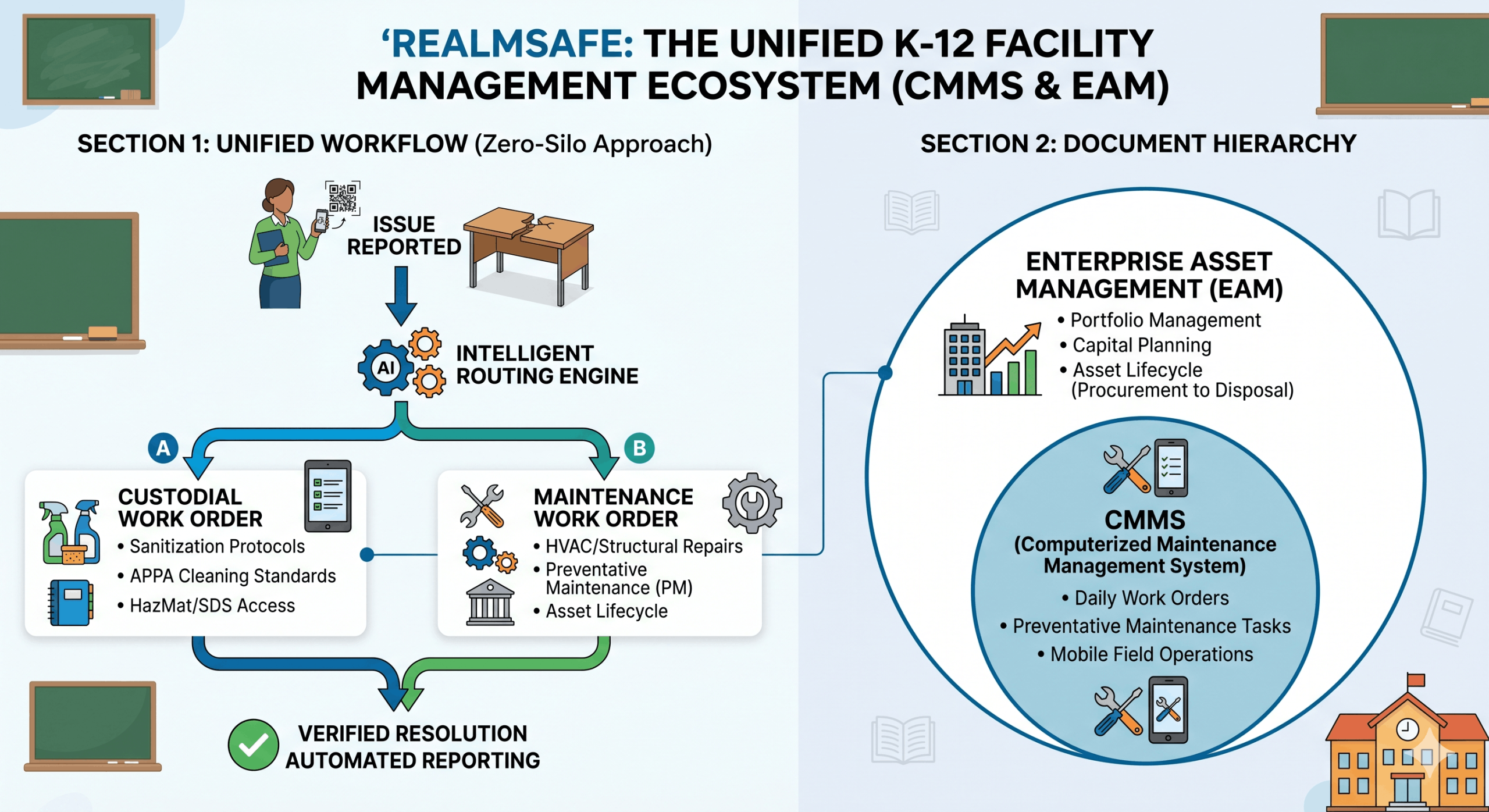
- CMMS (Computerized Maintenance Management System): This is the tactical engine of your maintenance department. It manages the day-to-day workflow of technicians, from routing urgent teacher requests to logging inventory and tracking preventative maintenance tasks.
- EAM (Enterprise Asset Management): This takes a holistic, long-term approach to your district’s physical portfolio. An EAM tracks physical assets (like HVAC systems, school roofs, and yellow bus fleets) from procurement, through years of maintenance, to final replacement and capital planning.
For K-12 school districts, the ideal solution seamlessly blends tactical CMMS execution with strategic EAM portfolio visibility.
2. Essential Features of Modern K-12 School Maintenance Management Software
Generic maintenance software designed for manufacturing plants or corporate high-rises often fails in a K-12 environment. A school-specific CMMS must address the unique realities of active campuses:
A. School Calendar-Aware Preventative Maintenance (PM)
Generic software schedules HVAC or boiler maintenance based on fixed intervals (e.g., “every 90 days”). A true school-specific system syncs directly with the district’s academic calendar.
- Intelligent Scheduling: High-noise tasks or critical classroom repairs are auto-scheduled during summer, winter, or spring breaks.
- Testing Safeguards: Heavy repairs are automatically restricted during state testing weeks to prevent classroom disruptions.
B. True Offline Mobile Field Operations
School maintenance technicians spend their days in Wi-Fi dead zones—including underground utility tunnels, metal-framed portables, and concrete boiler rooms.
- Seamless Offline Mode: Technicians must be able to pull up work orders, view asset histories, scan equipment QR codes, and take photo evidence without an active internet connection.
- Automatic Syncing: The system should securely cache changes locally and upload them automatically the moment the device reconnects to Wi-Fi.
C. Free-Tier Requestor Portals for Teachers & Staff
If a CMMS licenses users “per seat” (requiring paid accounts for every teacher, principal, and administrative assistant who might submit a maintenance ticket), costs skyrocket.
- Unlimited Requestors: Look for platforms that offer free, unlimited requestor access. This allows teachers to quickly report issues (like a loose desk edge or broken outlet) via a simple QR code or portal link, stopping minor hazards from becoming major injury liabilities.
3. The Power of Dedicated K-12 School Custodial Software
While maintenance teams focus on repair and longevity, the custodial staff manages daily safety, environmental cleanliness, and disease prevention. Combining your maintenance tools with dedicated school custodial software establishes a comprehensive risk mitigation strategy.
Digital Cleaning Inspections (APPA Standards)
To prove to school boards and health inspectors that campuses are clean, districts rely on APPA (Association of Physical Plant Administrators) Cleanliness Levels.
- Custom Inspections: Custodial managers can utilize mobile tablets to score classrooms, hallways, and cafeterias from Level 1 (Orderly Spotlessness) to Level 5 (Unkempt Neglect).
- Accountability: Attaching geo-located photos and digital timestamps to cleaning audits ensures standardized performance tracking across different shifts and campuses.
Automated HazMat and SDS Inventory Controls
Under OSHA guidelines, districts must guarantee that custodial staff has immediate, up-to-date access to Safety Data Sheets (SDS) for all cleaning products on campus.
- Digital HazMat Binder: If a chemical spill occurs, staff can immediately scan the container’s barcode with a mobile device to access SDS protocols and chemical safety details, avoiding dangerous paper filing errors.
4. Unifying Your Operations: The “Zero-Silo” Facility
The true value of a facility management ecosystem is unlocked when your custodial and maintenance systems “talk” to one another.
For example, during a routine cleaning inspection using your custodial software, a custodian spots a leaking pipe under a classroom sink.
- The custodian logs the leak on their mobile device.
- The software automatically triggers a corrective work order in the maintenance system.
- A technician is dispatched immediately, stopping water damage and potential mold growth before it starts.
5. Securing Board Approval: The Business Case for School Facilities Software
When presenting a software acquisition to superintendents or the school board, facilities directors must translate technical features into clear, fiscal realities:
| Operational Metric | Manual / Legacy Process | Unified CMMS & Custodial System |
|---|---|---|
| Emergency Repair Costs | High due to reactive “break-fix” cycles. | Decreased by 19% through structured preventive maintenance. |
| Asset Lifespan | Premature equipment replacements. | Extended by 11%+ on major HVAC and mechanical systems. |
| Compliance Readiness | Days of manual paper-file searching. | Instant, audit-ready reports for fire, OSHA, and ADA standards. |
| Team Productivity | Hours lost returning to offices for paperwork. | 30% improvement via mobile-first dispatching. |
Conclusion: Building a Safer, Smarter District
A unified approach to school facilities management does more than keep the lights on and the floors clean. By deploying specialized K-12 school maintenance management software and K-12 school custodial software, districts transition from expensive, reactive panic to calm, proactive stewardship. This strategic shift protects your student-athlete populations, guarantees absolute regulatory compliance, and ensures that public funding is directed where it belongs: supporting the classroom.


Leave A Comment