
Athletics & Activities Safety Compliance
In high school and middle school education, athletics and extracurricular activities are vital for student development, community pride, and school spirit. However, the athletic department is also one of the highest areas of liability and physical risk for any school district.
With complex state-mandated concussion protocols, expiring coach certifications, and aging sports equipment, Athletic Directors (ADs) can no longer rely on paper files stored in a physical locker room. Forward-thinking districts are automating their risk management using dedicated school athletics risk management software and student-athlete safety tracking systems.
This guide outlines the critical compliance pillars every district must implement to protect student-athletes, keep coaches qualified, and shield the school board from costly litigation.
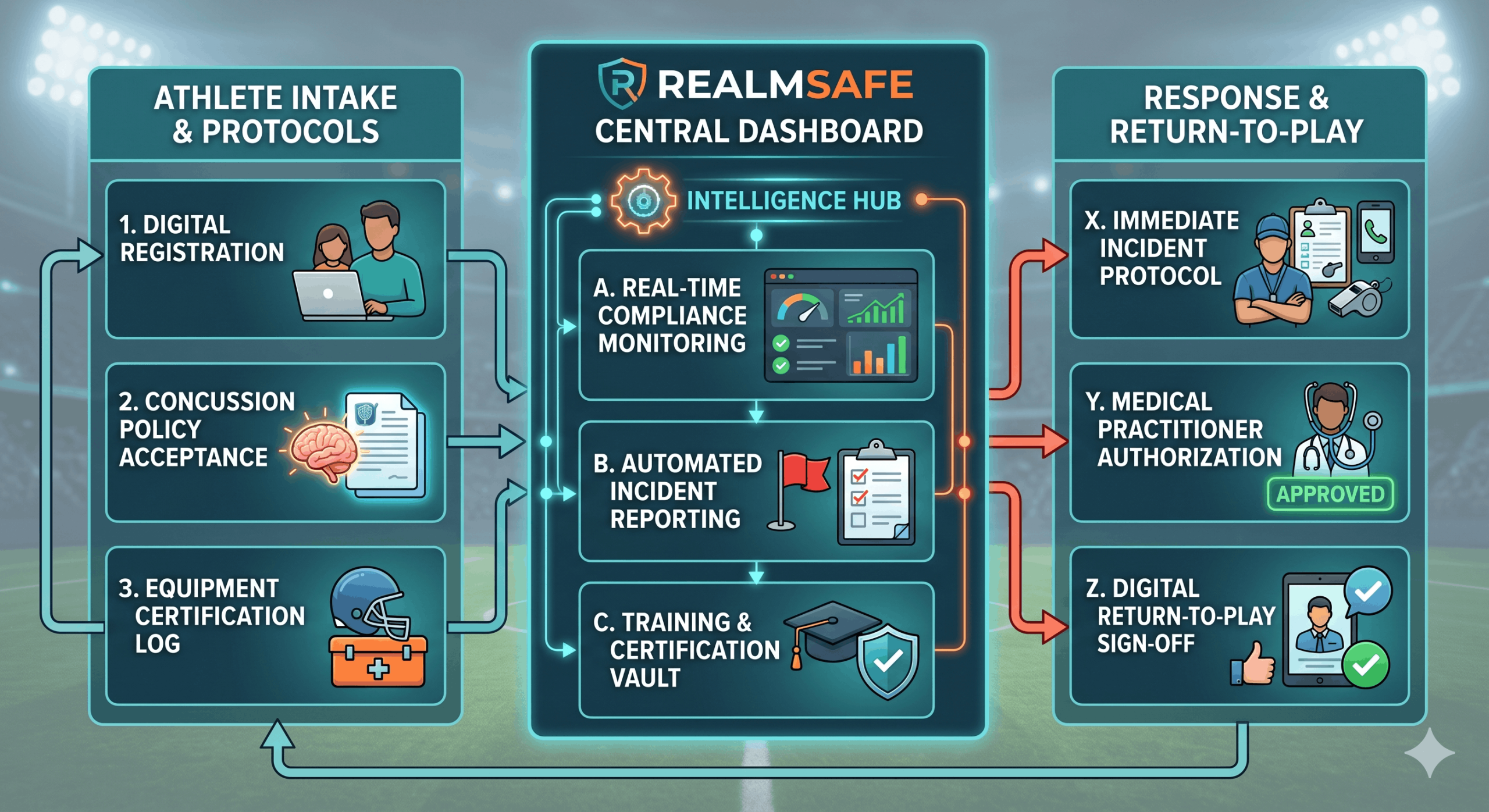
1. The Core Pillars of Athletic Compliance
To build an air-tight risk mitigation strategy, an athletic department must coordinate three distinct areas of operations:
- Coach Qualification: Verifying that every varsity, junior varsity, and volunteer coach has completed state-required training and background checks.
- Athlete Safety: Centralizing pre-participation physical evaluations (PPE), emergency contact forms, medical waivers, and active injury logs.
- Facilities & Equipment Safety: Scheduling regular digital audits of physical play zones (fields, gyms, pools) and safety equipment (helmets, pads, wrestling mats).
2. Smart Coaching Certification & Training Tracking
One of the most common athletic department compliance gaps is an unverified coach standing on a sideline. Most states mandate that coaches possess active certifications in CPR, First Aid, AED usage, Heat Illness Prevention, and Sudden Cardiac Arrest (SCA).
- Automated Expiration Alerts: A modern sports safety platform monitors these expiration dates in real-time, automatically emailing coaches and the athletic director 60, 30, and 15 days before a credential expires.
- Universal Dashboard: Instantly view which coaches are cleared for the field and which are locked out due to expired credentials, preventing compliance oversights before game day.
3. Equipment, Facilities & Venue Audits
Physical liability extends beyond the athletes and coaches to the very venues where games and practices occur. Software-driven field and equipment audits are crucial for reducing liability:
- Helmet NOCSAE Certification Tracking: Helmets must be reconditioned and recertified according to National Operating Committee on Standards for Athletic Equipment (NOCSAE) guidelines. A digital compliance system logs the serial numbers and manufacture dates of every helmet, alerting staff when an asset reaches its end-of-life limit.
- Facility Checklist Automation: Before the first whistle blows, athletic staff can use a mobile device to run through a safety checklist for bleachers, field turf G-max levels, swimming pool chemistry, and gym floor slickness—complete with digital timestamps and geo-located photos.
4. The Digital “Return-to-Play” Concussion Workflow
Navigating student-athlete concussions requires flawless administrative execution to ensure absolute alignment with state laws. A manual paper trail risks missing a physician’s clearance, exposing the school to catastrophic liability.
Using RealmSafe, the concussion protocol is digitized into a strict, step-by-step gatekeeper workflow:
- Immediate Lockdown: The moment an athletic trainer logs a suspected concussion, the software locks the student-athlete’s profile across all rosters. Coaches receive an immediate notification, preventing the athlete from participating in practices or games.
- Graduated Return-to-Play (RTP): The software guides the training staff through the state-mandated 5-step gradual reintroduction program, tracking daily physical symptoms.
- Formal Clearance Gate: The student cannot be unlocked on the digital roster until a signed clearance form from an authorized physician is uploaded and verified.
5. Building the Business Case for Athletic Risk Management
When presenting a software acquisition to superintendents, school boards, or insurance risk pools, the athletic department should frame the technology as a shield against catastrophic liability:
| Risk Area | Manual / Paper Process | Automated Athletic Software |
|---|---|---|
| Sideline Clearance | Risk of unqualified coaches due to manual oversight. | Zero-Discrepancy validation via automated database checks. |
| Concussion Compliance | Relying on verbal confirmations or misplaced notes. | Audit-proof digital timelines tracking every stage of recovery. |
| Emergency Preparedness | Emergency cards locked in a physical filing cabinet. | Instant mobile access to health profiles for trainers on the field. |
| Insurance Premiums | Standard rates with no proven risk reduction. | Lowered premiums through documented, proactive audit logs. |
Conclusion: Active Protection for Your School Ecosystem
An optimized athletic department doesn’t just win games; it protects the future of its students and the financial security of its district. By moving to a specialized compliance tracking system, districts eliminate administrative silos, keep athletic venues compliant, and allow coaches and athletic trainers to focus on what they do best: keeping kids active, healthy, and safe.
- Related Guide: Read our OSHA Lab Safety standards for secondary schools.